
Operations
Running an independent caravan park in Australia: what owners should know
Council approval, long-term residents, award wages, GST, card fees and how guests find you in 2026. What an independent caravan park owner in Australia needs to have sorted.
· 6 min read
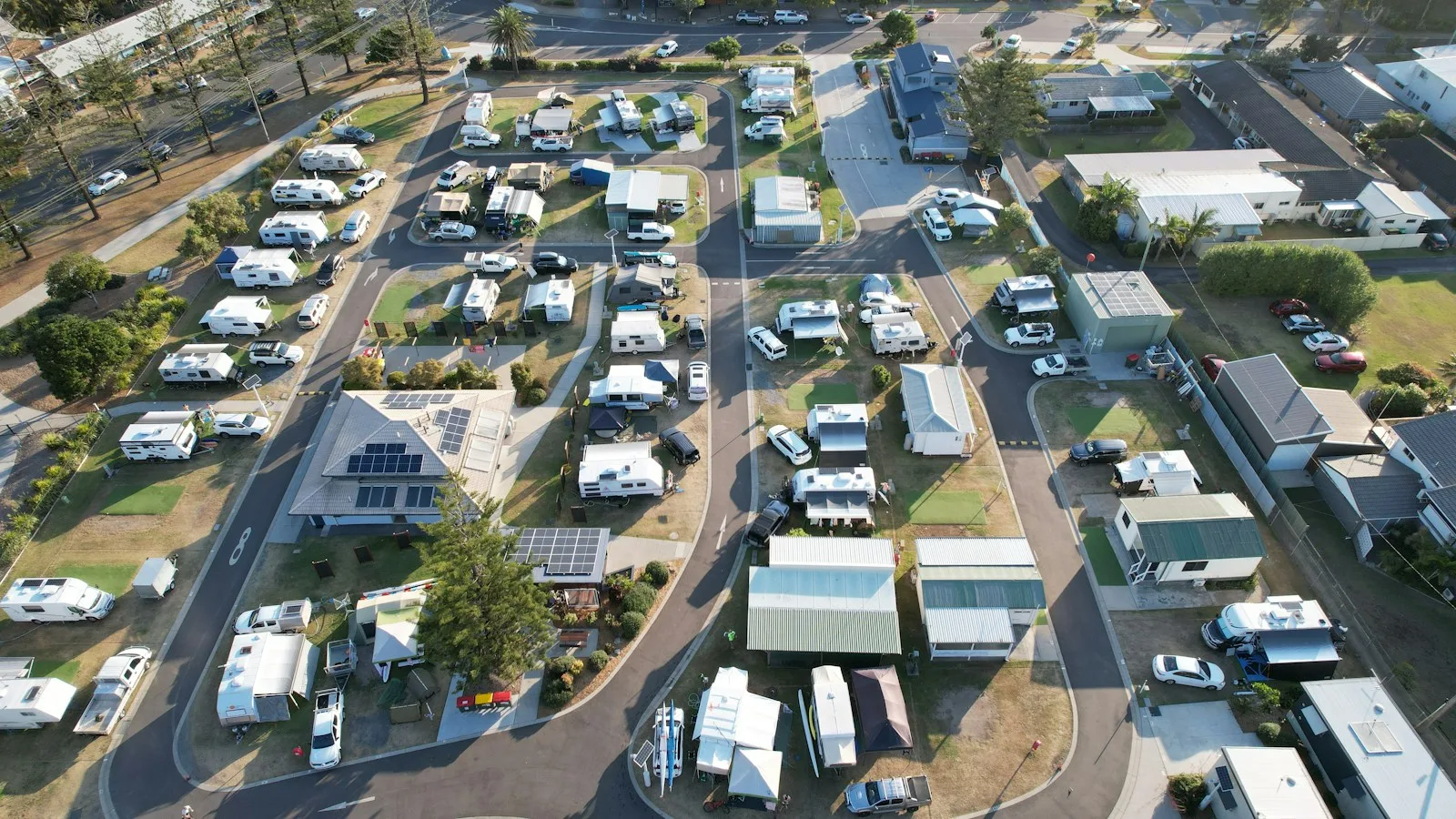
Buy a caravan park in Australia and you end up running a few businesses at once. You sell accommodation, you look after your own power and water network, and if anyone lives on site permanently you are also their landlord. Somewhere in there you clean an amenities block that half the park wants at 7am.
The big chains have a head office to track the rules and do the marketing. An independent owner has a manager, a few casuals and whatever reading they can fit in between changeovers. This is the list we would hand a new owner in their first month.
Your approval comes from the council
Each state regulates caravan parks its own way, and the local council usually holds the paperwork. In New South Wales a park needs council approval to operate, under a state regulation that sets site sizes, the gap between vans and how many toilets you need for the number of sites. In Victoria the council registers the park every year against state standards. Western Australia licenses parks through local government too, and other states leave more of it to council planning rules and local laws.
Read your approval or registration before you change the layout. Adding cabins, turning a row of tent sites into powered sites or letting someone put a manufactured home on a long-term site can all need fresh approval. A cabin the council never signed off is expensive to take out again.
Long-term residents have their own rights
People who live at your park permanently are covered by residential law, which is a different set of rules from the one for holiday guests. In New South Wales that is the Residential (Land Lease) Communities Act. Victoria’s Residential Tenancies Act has a part for caravan parks, and Queensland covers home owners in residential parks under the Manufactured Homes (Residential Parks) Act.
These laws set notice periods, how and when you can raise site fees, and the grounds for ending an agreement. You can’t move a resident on to free their site for the Christmas rush. Put every long-term arrangement in writing and keep those sites out of your nightly booking calendar.
Award wages land hardest in peak season
Most caravan park staff fall under the Hospitality Industry (General) Award, which sets minimum rates, casual loading and penalty rates for weekends and public holidays. Christmas Day, Boxing Day, New Year’s Day and Australia Day all fall inside the summer peak, which means your busiest days are also your most expensive to staff.
Price those dates with the cleaning roster in mind. The minimum wage moves every July, so check the Fair Work Ombudsman’s pay calculator then and adjust your rates for the coming season.
GST works differently for long stays
Once turnover reaches $75,000 a year you have to register for GST, and nightly stays are taxed at the full 10%. Stays of 28 days or more in commercial accommodation can be taxed at a concessional rate, which works out at around 5.5% of the price, if you choose to apply it. Permanent residents can be treated differently again.
Getting this wrong on a park full of winter long-stayers adds up quickly. Set it up once with an accountant who already works with parks, and ask them to check how each type of stay appears on your invoices.
The price on the page has to be the price they pay
Since 1 October 2026 a park can’t add a surcharge for Visa, Mastercard or eftpos payments. From 1 July 2027 a drip pricing law requires compulsory fees to be shown prominently with the base price, so a $45 powered site can’t grow to $63 one checkout step at a time.
The fix is the same for both. Fold your card costs into the nightly rate, and list any fee every guest pays right beside it.
Guests read your official website before they book
Travellers planning a trip around Australia used to scroll a directory. Plenty of them now ask an AI assistant which parks near Esperance take dogs, or what a powered site costs there this summer. Before it answers, the assistant runs its own searches for prices and reviews. For a plain question of fact it leans on the park’s official website. When the question is which park is best, it pulls in reviews and travel sites as well.
So publish the facts about your park on your own site, as ordinary text a search engine can read:
- Each site type with its 2026 nightly rates, peak and off-peak
- Power and amps, the longest van each site fits, pet rules and cancellation terms
Then look after your Google listing and reply to reviews, good and bad. A park that publishes nothing gets described from a directory entry written three owners ago.
Where independents win
Chains have loyalty programs and national advertising. You have the owner at the gate who remembers the family from last Easter, and you can change the dog policy or the winter rate on a Tuesday afternoon without asking anyone. Guests write about that in their reviews, and the reviews are what a traveller comparing parks reads.
Use your own photos on your website, and describe the park the way a regular would: which sites catch the morning sun, how far it is to the beach, where the kids ride their bikes.
Keep the admin small
Most of this list ends in paperwork or a phone call. An independent park can’t hire a revenue manager and a web team, so the systems have to be simple enough to run between changeovers.
We built Spacecamps for independent parks in Australia and New Zealand with that in mind. Each park gets its own booking page where guests see the sites, rates and open dates, then book and pay, with every fee and the GST shown line by line before they pay. You pay a flat monthly fee and we take no commission on stays (Stripe still charges its card fee). Whatever you use, put this year’s prices on a page you control and keep them current.
See your sites as guests would
Set up your park and booking page on a free trial.